











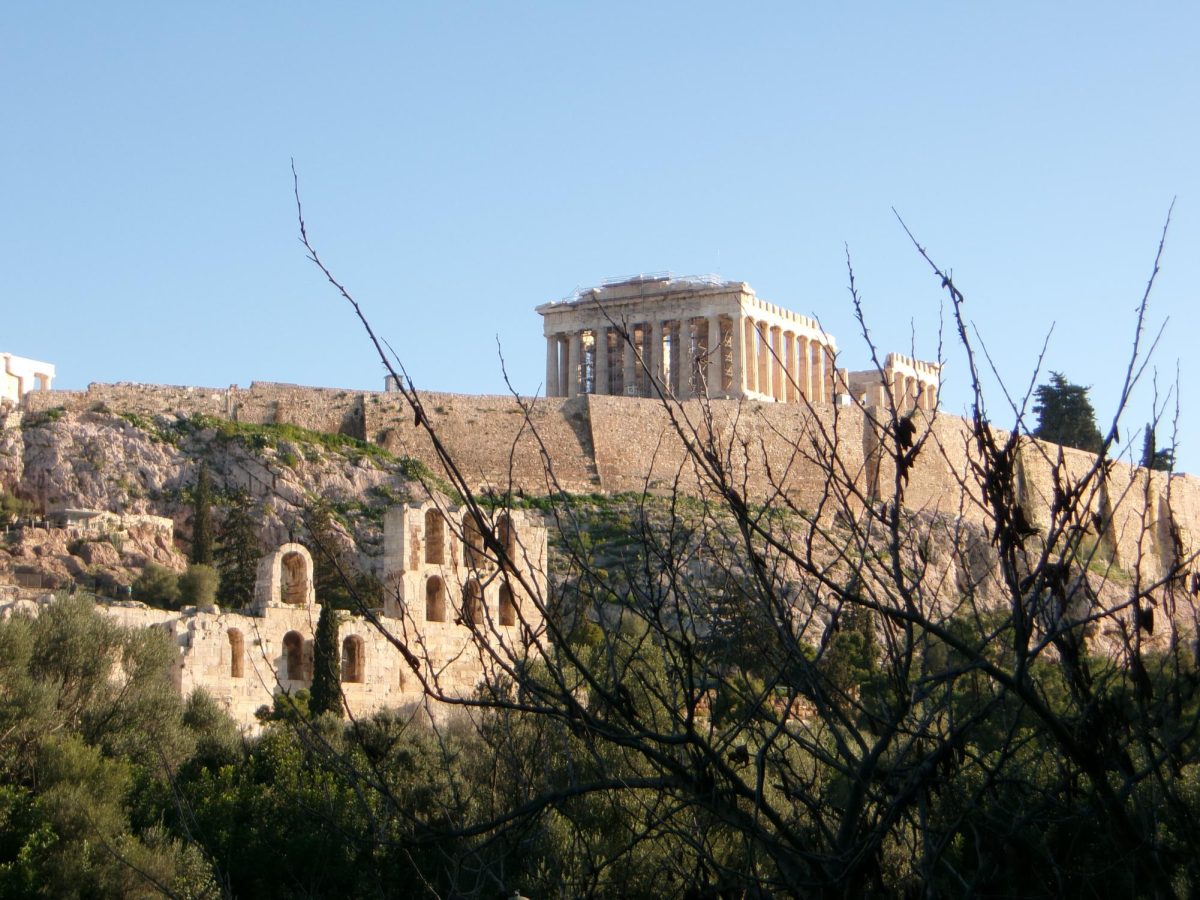
This mid-winter break, McClancy juniors and seniors embarked on a week-long journey to Greece, accompanied by McClancy’s international travel moderator, Ms. Colon, and a group of dedicated teacher chaperones. The trip proved to be a huge success, filled with awe-inspiring archaeological landmarks, incredible food, and a strong sense of camaraderie.
After arriving in Athens, our first stop was the Syntagma Square, a thriving town located in the heart of the city. We visited the Metropolitan Cathedral of Athens, which serves as the home of the Archbishop of Athens and stands at the center of the metropolis. While construction began in 1842 following Ottoman rule, the Metropolis Cathedral remains a powerful symbol of Athens’ legacy and perseverance in the face of imperialism. We also had the opportunity to see the Old Royal Palace, which is now home to the Greek Parliament. In addition to this, we witnessed the changing of the guards, which is performed hourly in front of the Tomb of the Unknown Soldier to commemorate Greeks who lost their lives in war.
The following day, we delved deeper into Athens’ rich history with a visit to the famous archaeological sights that accompany this capital. The term Acropolis, or ἄκρον in Greek, simply refers to the “highest point or extremity,” perfectly describing the iconic site overlooking the city. Although the Parthenon no longer serves as a temple to the Greek goddess Athena, its magnificence still stands as a testament to the origins of ancient Greece and the influence of democracy. After this memorable experience, we visited the Acropolis Museum, which houses every artifact found on the slopes surrounding the Acropolis from the Greek Bronze Age to the Roman and Byzantine periods. For lunch, we attended a hands-on cooking class, where we prepared and ate traditional dishes like Greek salad, tzatziki, and tiropita.
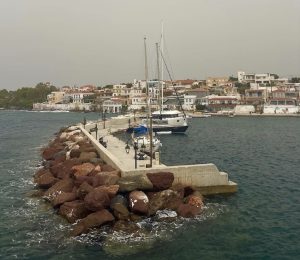
Our trip continued with a scenic cruise as we sailed through the Saronic Gulf, visiting two historic and beautiful islands. First was Hydra, which featured narrow cobblestone streets and vibrant houses. Then, we stopped at the island of Aegina to try their pistachios, which are renowned for being the best in the world. This island was exquisite, with many shops and restaurants to explore.
The next day, we were on the road towards Naflio, the initial capital of the modern Greek state from 1823 to 1834. Along the way, we stopped at the Corinth Canal, a narrow passage that connects the Ionian Sea with the Saronic Gulf and separates the Peloponnese peninsula from the Greek mainland. We then arrived at the ruins of Mycenae and learned more about the ancient Bronze Age city dating back to the 14th century BCE. We saw the famous Lion’s Gate, the burial sites where grave robbers were believed to have taken the Mask of Agamemnon, and the Treasury of Atreus, which is most commonly known as the tomb of Agamemnon. We ended the day by immersing ourselves in the traditional clay working techniques of the Mycenaean pottery era with a presentation and a hands-on class.
On the final day of our exhibition, we had an early-morning start by visiting the Palamidi Fortress, a towering structure built by the Venetians during their second occupation of Nafplio. As a result of Venetian occupation, Nafplio is deeply rooted in Italian influence, as evident in its neoclassical architecture and urban layout, which mirrors Italian seaside towns. After receiving free time to explore the city and eat lunch, we headed back towards Athens, where we concluded our trip with additional free time to purchase souvenirs and take in the city for the last time.
Overall, I had an extraordinary time on this school trip. Whether it be the food, sightseeing, or the friendships formed along the way, it offered something for everyone. It was the perfect balance between education and enjoyment, allowing students to fully immerse themselves in Greek culture while deepening their understanding of its historical developments and social life. I highly recommend all students to take part in this life-changing experience, and directly bring their classroom history lessons to life in real time by touring a foreign country. Next year’s destinations include visiting Berlin, Prague, Krakow, and Budapest, so be on the lookout for updates!