





































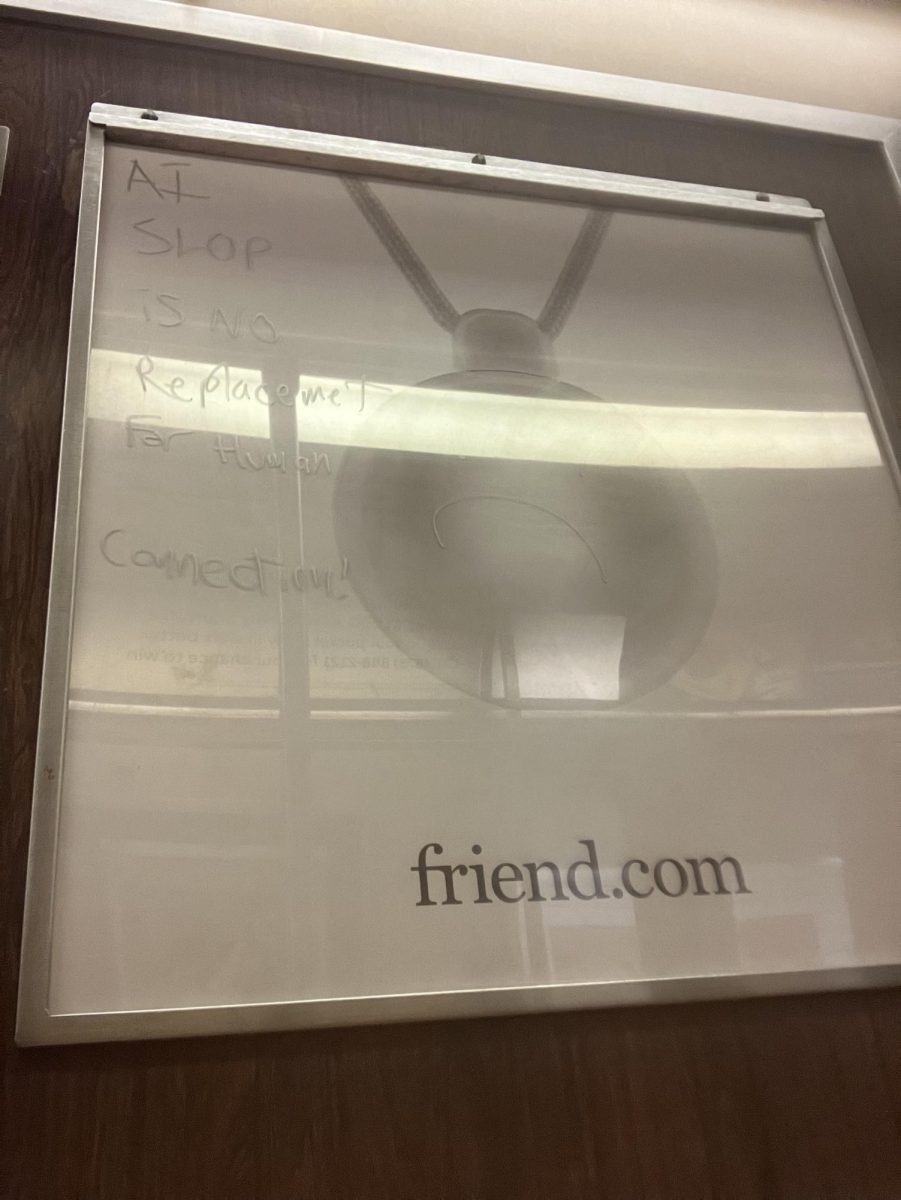



Have you seen these “friend.com” advertisements popping up all over the city? It’s an AI chatbot who acts as a friend rather than a regular website where you meet real friends on. This chatbot is not only a website, but can also be purchased as a necklace that picks up on the surrounding environment. This allows consumers to start a conversation without having to fill the chatbot in on what just happened. The best part is you can send a message or hold down on the necklace’s pendant to ask a question or simply have a conversation. What’s different about this chatbot compared to other AI bots, such as ChatGPT, is that it will respond in conversations based on the ideas you say you like in other conversations. For example, if you mention you savor pizza in one conversation, the chatbot will remember that and bring pizza up in separate conversations unprompted. While AI starts to take over millions of people’s jobs around the globe, people have always been reassured by being told AI won’t compare to human connection, but now AI is taking over it too.
Friend.com is marketed to replicate a real friend, but how well does it mimic a true friend? While a friendship is more complex than a few bullet points, it can be summed up to include these four major characteristics: communication, dependability, shared experiences, and empathy, which previous AI tools lack. The first issue with the chatbot is it only asks questions about the person it’s chatting with, but when asked about them, their response is not very intricate and follows up with a question for the other person. While a part of being a friend is listening to the other person, both sides should be able to express themself. If you are relying simply on AI for a friend it will be hard to develop the human trait of empathy because you won’t learn how to listen to someone else’s issues at hand, with no empathy you will not learn how to develop real relationships either.